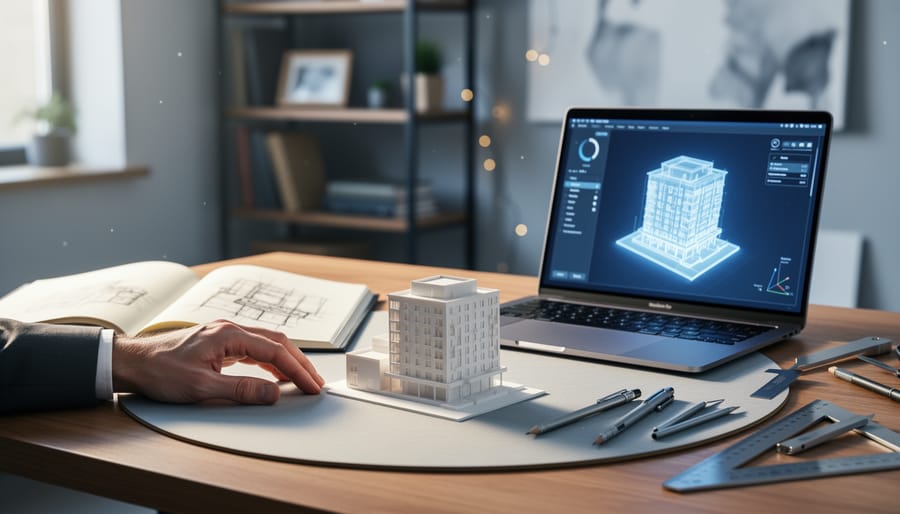
Online architecture lessons have transformed access to professional design education, offering structured courses, specialized certifications, and flexible skill development paths that range from foundational design theory to advanced computational modeling. Whether you’re a student supplementing formal training, a professional updating your technical capabilities, or an enthusiast exploring architectural principles, digital platforms now deliver instruction comparable to traditional studio environments without geographic or scheduling constraints.
The shift to online learning in architecture gained momentum over the past decade, but the quality gap has narrowed dramatically. Leading institutions now provide comprehensive programs that incorporate design critiques, portfolio development, and collaborative projects through sophisticated virtual studios. This educational model particularly benefits those balancing work commitments, those in regions with limited access to architecture schools, and practitioners seeking targeted knowledge in emerging specialties like sustainable design or parametric architecture.
Selecting the right online architecture lesson requires clarity about your current skill level and specific goals. Entry-level courses typically cover drawing fundamentals, architectural history, and design principles. Intermediate programs focus on software proficiency in tools like AutoCAD, Revit, and SketchUp. Advanced offerings tackle complex subjects including building systems integration, urban planning theory, and digital fabrication techniques. Many platforms now combine asynchronous video lessons with live critique sessions, creating hybrid experiences that preserve the interactive essence of traditional architectural education.
The global nature of online learning brings another advantage: exposure to diverse design philosophies and building traditions. Students routinely engage with instructors and peers across continents, reviewing projects that reflect varied climatic conditions, cultural contexts, and regulatory frameworks. This international dialogue enriches understanding far beyond what single-location programs typically provide.
The Evolution of Online Architecture Learning
Online architecture education began modestly in the late 1990s with static course materials and recorded lectures posted on university servers. These early offerings served as supplementary resources rather than standalone learning pathways, limited by bandwidth constraints and the absence of collaborative tools that define architectural practice. Students could download PDFs of lecture notes or watch grainy video recordings, but the interactive critique sessions and hands-on model-making that form architecture’s pedagogical core remained confined to physical campuses.
The 2000s brought gradual improvements as broadband spread and platforms like YouTube democratized video content. Architecture schools experimented with hybrid models, recording design reviews and making them available online, yet the technology still couldn’t replicate the spontaneous exchanges of a studio environment. Software tutorials gained traction as practicing architects shared CAD and 3D modeling techniques, creating an informal knowledge network outside formal institutions.
Everything accelerated when schools shifted online in 2020. The pandemic forced architecture programs to reimagine their entire delivery model within weeks. Faculty who’d resisted digital instruction suddenly had no choice. Zoom became the makeshift studio. Digital whiteboards replaced trace paper. Students pinned up work in virtual galleries and received critiques through screens. While initially a crisis response, this period proved that meaningful architectural education could happen remotely if the tools and pedagogical approaches evolved together.
By 2023, purpose-built platforms emerged with features tailored to architecture’s unique demands: real-time rendering for group design sessions, integrated annotation tools for markup and feedback, virtual reality walkthroughs of student projects, and cloud-based software that eliminated the need for expensive personal workstations. Professional organizations began recognizing online continuing education credits, legitimizing digital learning for licensure requirements.
Today’s landscape reflects accumulated lessons from two decades of experimentation. The 2026 online architecture lesson isn’t a recorded lecture with a quiz, it’s a comprehensive learning ecosystem combining live instruction, asynchronous skill-building modules, peer collaboration spaces, and portfolio development tools. Changing professional needs drove this sophistication: firms expect graduates fluent in computational design, sustainability analysis software, and global collaboration protocols. Online platforms adapted faster than traditional curricula, offering specialized tracks in emerging fields that brick-and-mortar programs struggle to staff. What began as a supplement has become, for many learners, the primary pathway into architectural knowledge.
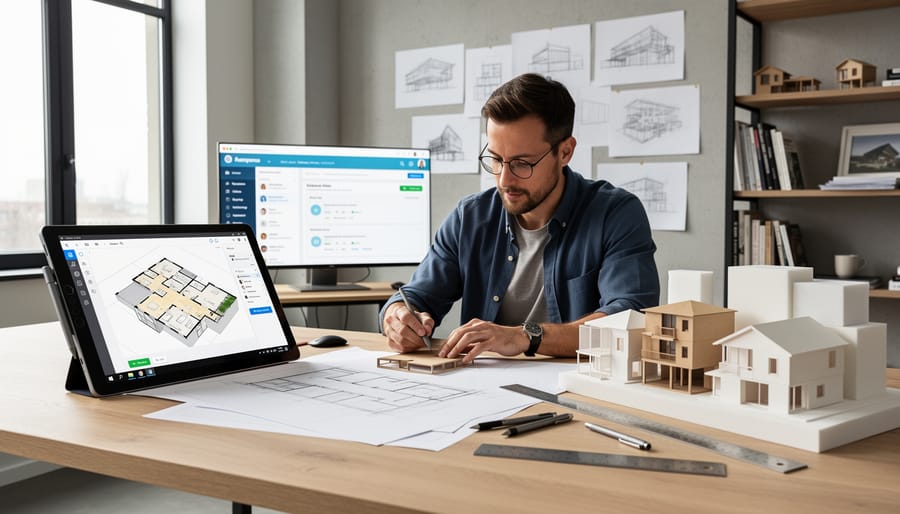
Types of Online Architecture Lessons Available Today
Live Interactive Courses and Workshops
Live interactive courses bring the energy and immediacy of a physical design studio into online spaces, preserving what many consider the soul of architectural education: real-time dialogue and collective creativity. These synchronous sessions typically run on video conferencing platforms enhanced with digital whiteboards, screen sharing, and breakout rooms where students sketch, model, and present work while instructors and peers respond in the moment.
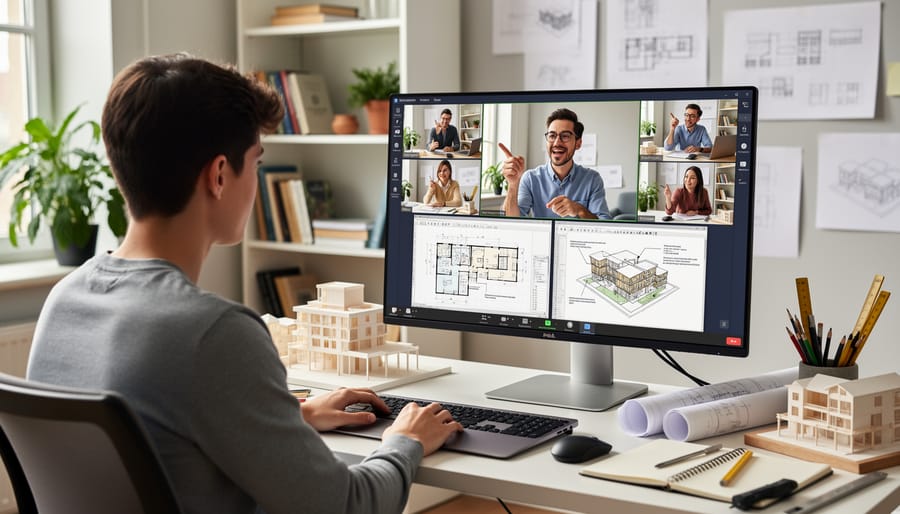
Design studios conducted live online mirror traditional formats but leverage digital tools in surprising ways. Students share screens to walk through CAD models or sketches, receiving instant feedback from instructors who can annotate directly on shared work. A virtual design critique session might involve five students presenting proposals for a housing project, with the instructor and classmates questioning design decisions, suggesting alternatives, and debating spatial strategies, all happening in real time despite participants being scattered across continents.
The synchronous format creates accountability and rhythm that self-paced courses can’t replicate. Scheduled sessions establish structure, while live interaction prevents the isolation that sometimes derails solo online learning. Workshops focusing on specific skills, parametric modeling, hand-drawing techniques, lighting analysis, benefit particularly from immediate instructor guidance when students encounter obstacles.
Community building emerges naturally through these repeated live encounters. Cohorts develop rapport through collaborative exercises, informal chat during breaks, and seeing each other struggle and progress through the same challenges, fostering connections that often extend beyond the course itself.
Self-Paced Learning Modules
Self-paced learning modules represent the most flexible format for architecture education, allowing professionals to advance skills without disrupting their work schedules. These asynchronous courses span technical proficiency through advanced theory, structured so learners can pause, replay, and practice at their own rhythm. A typical module might include video lectures, downloadable resources, interactive quizzes, and project assignments that simulate real-world architectural challenges without requiring simultaneous attendance.
The breadth of available subjects addresses nearly every aspect of contemporary practice:
- BIM software training for industry-standard digital workflows
- Sustainable design principles and certification pathways
- Parametric modeling for computational design approaches
- Visualization techniques including rendering and presentation graphics
- Construction documentation and detailing standards
What distinguishes effective self-paced programs is their modular structure: you can target specific skill gaps rather than committing to comprehensive curricula. An architect specializing in residential projects might spend three weeks mastering energy modeling software, while a recent graduate tackles structural fundamentals over several months. Many platforms offer lifetime access to purchased courses, letting you revisit material as software updates or project needs arise. This permanence transforms courses into reference libraries rather than one-time experiences, particularly valuable for technical subjects where periodic refreshers maintain proficiency.
Degree and Certificate Programs
Accredited online architecture programs now offer pathways to recognized degrees without requiring physical campus attendance. Several universities provide NAAB-accredited Master of Architecture degrees through hybrid formats, combining remote coursework with intensive on-site sessions for studios and reviews. These programs carry the same professional weight as their traditional counterparts, meeting state licensure requirements while accommodating working professionals.
Professional certificate programs fill the gap between informal learning and full degrees. Organizations like the American Institute of Architects and specialized institutions offer focused certificates in areas such as sustainable design, parametric modeling, and historic preservation. These typically require 40 to 120 hours of coursework and culminate in portfolio reviews or examinations that verify competency.
Continuing education units remain essential for maintaining architectural licenses across most jurisdictions. Online platforms now deliver AIA-approved learning units covering code updates, emerging materials, and practice management. Architects can fulfill annual requirements entirely through digital courses, with completion tracked through integrated systems that report directly to licensing boards.
Legitimacy concerns center on accreditation monitoring and verification. Prospective students should confirm that degree programs hold regional accreditation and architecture-specific recognition from NAAB or international equivalents. Certificate providers should demonstrate industry partnerships and employer recognition. Verify that continuing education credits come from approved providers before investing time and money, not all online offerings meet professional standards.
Global Platforms Leading the Online Architecture Education Movement
Several platforms have emerged as leaders in democratizing architectural education, each bringing distinct pedagogical approaches and reaching learners across continents. These range from established universities extending their reach digitally to nimble independent platforms built specifically for online delivery.
Coursera and edX anchor the university-affiliated end of the spectrum, partnering with institutions like Harvard, MIT, and the University of Michigan to offer architecture courses that carry academic rigor. These platforms excel at delivering structured theory, history, and foundational design principles through recorded lectures, peer-reviewed assignments, and discussion forums. Their strength lies in credibility, learners gain exposure to faculty from prestigious schools at a fraction of traditional tuition costs.
The Architect’s Workshops, based in Melbourne but serving a global audience, takes a different approach with intensive, mentor-led programs focused on professional practice. Their courses emphasize real-world project workflows, from client consultation through construction documentation, taught by practicing architects who share current industry challenges. This platform particularly resonates with mid-career professionals seeking practical skill upgrades rather than theoretical foundations.
From Europe, Think Architects Academy operates with a strong sustainability and social responsibility emphasis, reflecting contemporary European architectural values. Their courses frequently incorporate case studies from regenerative design projects and community-focused developments across Scandinavia and Central Europe. The platform’s collaborative model pairs learners across countries for joint design exercises, fostering the global perspective increasingly essential in architecture.
| Platform | Primary Focus | Format | Best Suited For |
|---|---|---|---|
| Coursera/edX | Theory and foundations | Self-paced university courses | Students and career explorers |
| The Architect’s Workshops | Professional practice | Mentor-led intensive programs | Professionals upskilling |
| Think Architects Academy | Sustainable design | Collaborative global projects | Sustainability-focused practitioners |
| ArchDaily Plus | Software and visualization | Tutorial library | Students and enthusiasts |
| Royal Institute Courses | Continuing education | Live workshops with CPD credits | Licensed professionals |
ArchDaily Plus leverages its position as the world’s most visited architecture website to offer a vast tutorial library focused on software mastery and visualization techniques. Rather than structured curricula, it provides on-demand learning for specific tools, Revit, Rhino, rendering engines, making it invaluable for students and professionals needing targeted skill development.
The Royal Institute of British Architects and similar professional bodies worldwide now offer online continuing professional development courses that combine live webinars with recorded content. These programs prioritize regulatory updates, emerging building technologies, and compliance topics that practicing architects need for licensure maintenance, filling a niche that independent platforms rarely address.
What unites these diverse platforms is their commitment to breaking down geographic and economic barriers that historically limited access to quality architectural education, creating pathways for learners regardless of location or background.
What Makes Online Architecture Lessons Effective
Effective online architecture lessons share several distinguishing characteristics that transform passive content consumption into genuine skill development. The most critical factor is the balance between theoretical knowledge and practical application, courses that excel integrate both dimensions rather than treating them as separate tracks.
Project-based learning stands at the core of quality programs. Rather than watching lectures about facade design principles, students might tackle a multi-week assignment developing a building envelope for a specific climate and site. These projects mirror real-world constraints: budgets, zoning requirements, environmental considerations, and client needs. The best programs structure projects incrementally, with checkpoints that allow for instructor feedback and course correction before moving to the next phase.
Interactive elements separate robust learning experiences from glorified video libraries. Look for programs offering live design critiques, where instructors and peers examine work in progress. Real-time feedback replicates the studio environment’s iterative nature, you present, receive critique, revise, and present again. This cycle develops critical thinking and resilience far more effectively than submitting a final project for a grade.
Instructor accessibility makes or breaks an online architecture course. Effective programs provide multiple touchpoints: office hours via video call, asynchronous question forums with guaranteed response times, and annotated feedback on submitted work. When an instructor can screen-share to demonstrate a Revit technique you’re struggling with or mark up your drawing to explain why a proportion feels off, the distance collapses.
Peer collaboration tools address architecture’s fundamentally collaborative nature. Quality platforms facilitate group projects through shared digital workspaces, enabling students across continents to co-develop designs. Discussion boards focused on specific assignments create communities where students troubleshoot software issues, share reference projects, and debate design approaches.
The most sophisticated programs incorporate hands-on components despite the digital format. Some ship physical model-making materials to students. Others partner with local fabrication labs where learners can access laser cutters and 3D printers. Virtual reality tools now allow students to “walk through” their designs at full scale, catching spatial issues that remain invisible in plan view.
Structured progression matters too. Effective courses scaffold complexity, starting with fundamental concepts before layering advanced techniques. Clear learning objectives for each module help students track progress and understand how individual lessons connect to broader competencies. When these elements align, online architecture education delivers outcomes comparable to traditional programs while offering flexibility that physical classrooms cannot match.
Bridging the Digital Gap: Studio Culture and Hands-On Learning
Architecture’s soul has always lived in the studio: the late-night design charrettes, the texture of chipboard models, the spontaneous desk crits where an instructor sketches directly onto your drawing. Translating this visceral, collaborative environment to a screen presents online architecture education’s most formidable challenge. Yet platforms in 2026 are finding increasingly sophisticated ways to preserve what makes studio culture invaluable.
Virtual reality design studios now offer surprisingly immersive alternatives to physical pin-up spaces. Students wearing VR headsets can walk through their designs at full scale, manipulate three-dimensional forms with hand controllers, and gather in virtual critique spaces where classmates appear as avatars around a shared model. The technology captures something essential that flat-screen software misses: the spatial experience of architecture itself. Several programs report that students develop stronger three-dimensional thinking when they can physically move through their designs during the development process.
The materiality problem has spawned creative workarounds. Some courses ship physical material kits to students, enabling everyone to work with identical foam board, basswood, and modeling supplies during synchronized build sessions. Remote fabrication networks allow students to design digitally, then send files to local makerspaces or university-affiliated labs for CNC milling, laser cutting, or 3D printing. The designer still experiences the crucial feedback loop between digital intention and physical reality, even if separated by geography.
Hybrid models are proving particularly effective for preserving studio culture while maintaining flexibility. These programs combine intensive in-person residencies, where students work side-by-side for a week or two, with extended online collaboration phases. The brief physical gathering establishes relationships and shared vocabulary that sustain the remote work periods. Students report that having met their cohort face-to-face fundamentally changes the quality of their digital interactions afterward.
Digital collaboration tools have evolved beyond simple video calls. Platforms now enable real-time co-design where multiple students manipulate the same model simultaneously, persistent virtual studios where work remains visible to the cohort 24/7, and annotation systems that replicate the red-pen markup of traditional desk crits. The best programs recognize that technology should facilitate human connection rather than replace it, using digital tools to amplify rather than diminish the collaborative spirit that defines architectural education.

Who Benefits Most from Online Architecture Lessons
Online architecture education serves an increasingly diverse audience, each with distinct motivations and constraints that make digital learning particularly valuable. Understanding which profile aligns with your situation helps identify programs offering the greatest benefit.
Architecture students currently enrolled in traditional programs represent a substantial user group. They turn to online lessons for software skill development outside classroom hours, exploration of specialized topics their curriculum doesn’t cover, and exposure to international design perspectives their institution may not provide. A student at a regional university, for instance, might supplement local coursework with online modules in parametric design or sustainable materials from instructors practicing globally.
- Architecture Students
- Current degree candidates seeking supplementary skills, specialized knowledge, or software training beyond their core curriculum. They use online lessons to fill gaps and gain competitive advantages.
- Working Professionals
- Licensed architects and designers pursuing continuing education credits, new technical skills, or emerging specialty areas while maintaining full-time practice. Time flexibility is their primary need.
- Career Transitioners
- Individuals from adjacent fields (engineering, construction, interior design) or unrelated backgrounds exploring architecture as a second career. They require foundational knowledge and portfolio development without full degree commitment.
- International Learners
- Students and professionals in regions with limited access to quality architectural education institutions. Online platforms provide connections to global standards and practices.
- Design Enthusiasts
- Non-professionals passionate about architecture who seek deeper understanding for personal enrichment, homeowner projects, or informed appreciation of the built environment.
Working professionals constitute another major segment, often juggling practice demands with the need to stay current. They gravitate toward evening or weekend workshops, self-paced technical courses on emerging software, and certificate programs offering continuing education credits. The flexibility to learn between projects or during slower periods makes online formats far more feasible than returning to campus.
Career changers approach online architecture lessons as exploratory pathways or accelerated preparation. Someone transitioning from engineering or construction management might take foundational design courses to assess genuine interest before committing to a full degree program, while building portfolio pieces demonstrating their commitment.
Finally, architecture enthusiasts, homeowners planning renovations, urban planning advocates, or simply people fascinated by the built environment, benefit from introductory courses offering literacy without professional rigor. These learners seek understanding and appreciation rather than career credentials, making accessible online content ideal for their purposes.
Cost Considerations and Return on Investment
Online architecture lessons present a dramatically different economic proposition than traditional education. Free platforms like YouTube and institutional open courseware offer foundational knowledge at zero cost, while specialized software tutorials range from $20 to $100 per course. Mid-tier options include monthly subscription platforms ($30-$80) providing unlimited access to course libraries, and individual certificate programs typically cost $200-$1,500. Premium offerings, accredited degree programs or intensive professional certifications, run $3,000-$25,000, still a fraction of traditional architecture degrees that exceed $100,000.
The value equation shifts dramatically when considering traditional education’s hidden costs: years of foregone income, campus housing, materials, and studio fees. A working professional can complete a specialized rendering course for $500 while maintaining their salary, whereas the same knowledge acquired in a traditional setting might require semester-long enrollment at tenfold the cost.
Financial accessibility has improved through employer tuition assistance programs, platform-specific scholarships, and payment plans. Many universities now offer stackable credentials where individual courses contribute toward larger certifications, letting learners spread costs across career stages.
Evaluating return on investment requires honest assessment of career goals. A $200 parametric design course that lands a BIM coordinator role justifies itself immediately. Conversely, a $5,000 certificate in historic preservation holds limited value if your firm specializes in commercial development. Calculate potential salary increases, client acquisition opportunities, or competitive advantages the specific skills provide. AI-assisted learning platforms increasingly personalize recommendations based on local market demands and individual skill gaps, helping learners make financially sound decisions.
The strongest investment typically combines free foundational resources with targeted paid courses addressing specific career bottlenecks, creating a customized education path that balances cost control with strategic skill development.
The Future Trajectory of Online Architecture Education
As online architecture education matures beyond 2026, several converging trends signal a profound shift in how architectural knowledge gets created, shared, and applied across the globe.
Artificial intelligence is moving from novelty to necessity in online architecture lessons. Within the next three years, expect AI tutoring systems that provide real-time design feedback tailored to each learner’s skill level, much like having a studio critic available at midnight. These systems won’t replace human instructors but will handle routine feedback on technical aspects, site analysis, code compliance, structural feasibility, freeing educators to focus on conceptual development and design philosophy. Some platforms are already testing AI that can generate alternative design iterations based on student proposals, accelerating the iteration cycle that traditionally required weeks of studio time.
Virtual and augmented reality technologies are finally achieving the fidelity and affordability needed for widespread adoption. By 2028, most comprehensive online architecture programs will likely offer VR design environments where students can experience spatial qualities at full scale before construction, collaborate in shared virtual studios regardless of physical location, and even conduct virtual site visits to projects worldwide. This immersive dimension addresses one of online learning’s most persistent limitations, the inability to genuinely understand scale and spatial experience through flat screens.
The credential landscape is fragmenting into something more nuanced than traditional degrees. Micro-credentials and stackable certificates allow professionals to demonstrate specific competencies, parametric design, passive house certification, computational design, without committing to years-long programs. Employers increasingly recognize these targeted credentials, particularly when issued by respected institutions or platforms with rigorous assessment standards.
Perhaps most significantly, online platforms are enabling genuinely global collaborative projects that transcend the Western-centric architectural canon. Students in Nairobi, São Paulo, and Jakarta can now work together on design challenges addressing climate adaptation, informal settlements, or culturally responsive architecture, projects that reflect architecture’s actual global diversity rather than the limited perspective of any single institution.
Sustainability and social responsibility are becoming foundational rather than elective. Forward-thinking programs integrate environmental performance simulation, life-cycle analysis, and community engagement methodologies throughout their curricula, preparing architects who view ecological and social impact as fundamental design parameters rather than constraints.
This democratization of architectural education creates opportunities for voices and perspectives historically excluded from the profession to shape its future direction, potentially transforming not just how we learn architecture but what architecture itself becomes.

Online architecture lessons have fundamentally altered how knowledge flows through the profession. What began as a response to physical limitations has evolved into a deliberate, democratizing force that connects learners across continents, economic backgrounds, and career stages. The barriers that once kept architectural education confined to prestigious institutions and urban centers have given way to platforms where a student in Lagos can learn from a practitioner in Copenhagen, and a mid-career architect in Buenos Aires can master parametric design alongside peers from Singapore.
This transformation extends beyond mere access. Digital platforms have created new forms of architectural community, where critique, collaboration, and cultural exchange happen in real time despite geographic distance. The profession benefits from this diversity of perspectives, which enriches design thinking and challenges regional conventions.
Whether you’re considering a formal degree program, seeking to master a specific software, or simply exploring architectural thinking, 2026 offers more pathways than ever before. Start by clarifying your objectives and time commitment, then investigate platforms that align with your learning style. The architectural community waiting in these digital spaces is vibrant, supportive, and eager to welcome your unique perspective.